Ice cream
No noticeable effect on one person, a high spike on another.
Nutrisense journalMetabolic health
Nutrition advice is written for an average. Continuous glucose data keeps showing that almost nobody is that average.
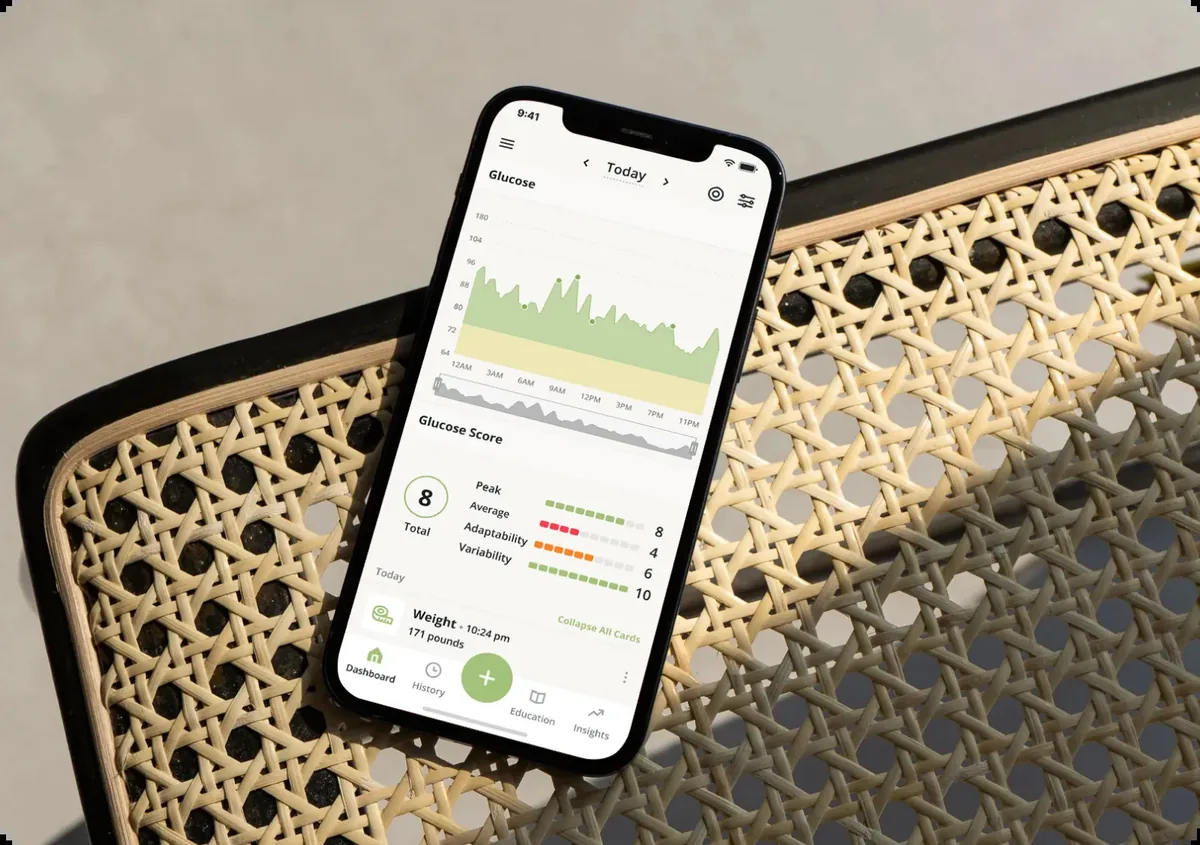
She thought she had ordered carefully. A small burger, six fries, two glasses of iced tea, barely sweetened. Lunch with friends, the sort of meal you would call reasonable and never think about again.
Then the number came back. Rebecca Landers Brown had been wearing a continuous glucose monitor for ten days when she wrote her review of the Nutrisense program, and this is how she described that lunch:
“I thought I was having a conservative mini burger, six fries and two glasses of ice tea, minimally sweetened. Wow! My first scan after that meal was so surprising, I showed a number that was in the pre-diabetes range.”
Rebecca Landers Brown, App Store review published by Nutrisense on its reviews page
The interesting part is not the number. It is that she had been eating meals like that one for years with no way of knowing. Nothing about the plate looked like a problem. No label warned her. No app could have told her, because no app knew anything about her.
That is the quiet catch in almost every piece of nutrition advice you have ever been given. It was written for an average person. And the further you look into the data, the harder it becomes to find anyone who actually is that person.
This is not a fringe position. It is what Nutrisense itself publishes, in plain language, in its own journal:
“It is important to remember that the same food can have radically different effects on different people.”
Nutrisense, Getting Personal With Blood Glucose
The article takes the most innocent example available, a banana, and points out that two people can respond to it differently depending on factors that have nothing to do with the fruit. One of them is the composition of your gut bacteria. Research, the company notes, shows that gut microbiome composition can predict whether you will have a larger or smaller glucose response to a given ingredient.

And then the line that should end the argument:
Read that twice. Not a fringe food. Not a special condition. Ice cream, two ordinary people, two different physiological events. If that is true, then a list of good foods and bad foods is not wrong so much as it is unfinished. It stops exactly where your body begins.
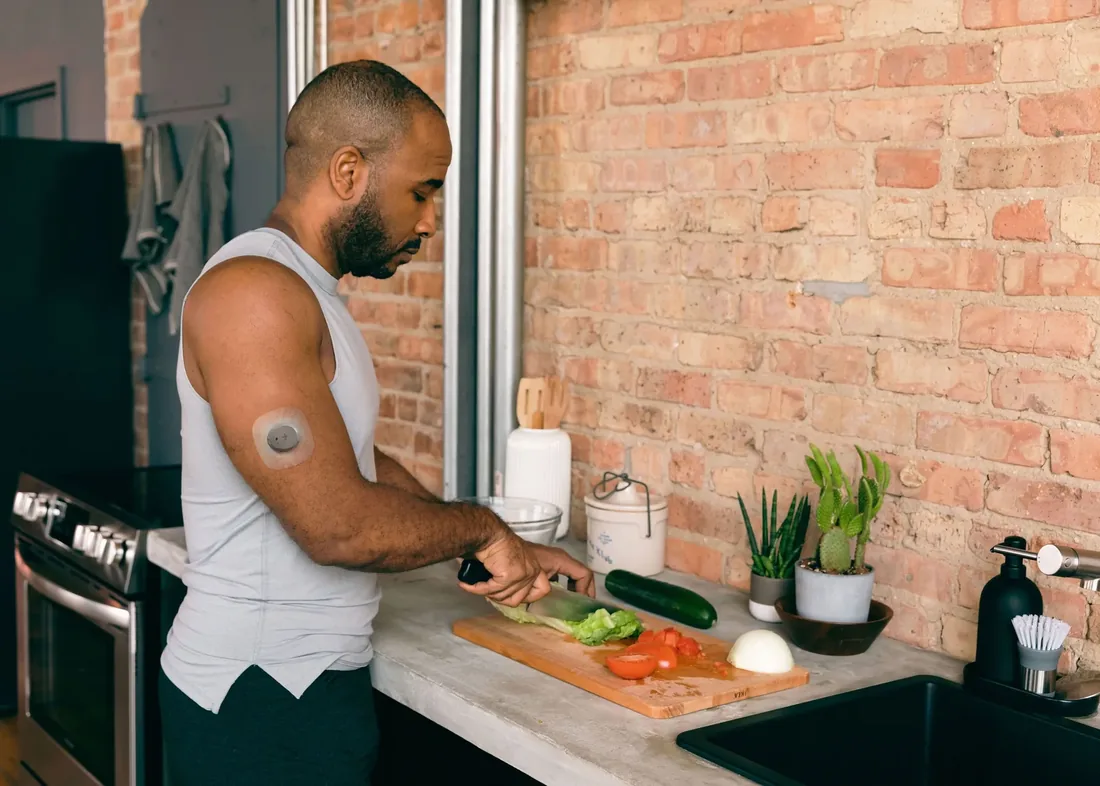
Here is where it gets genuinely strange, and where the usual advice runs out of road entirely. It is not only that your neighbour responds differently to a food than you do. You respond differently to the same food than you did yesterday.
Charlotte LaGuardia, a Nutrisense member whose full account is published on the company's site, ran the experiment most people never think to run. She ate the same pizza twice.
Personal pizza, then straight back to the desk
Glucose went “way out of range”
The same pizza, then a 30 minute walk
Levels “stayed in range”
“In this experiment, I first ate a personal pizza and continued working at my desk. My glucose went way out of range. The next day I ate the same pizza but went for a 30-minute walk after, and my levels stayed in range!”
Charlotte LaGuardia, member story published by Nutrisense
Identical food. Opposite outcome. The variable was not on the plate at all, it was the half hour that followed. No glycemic index chart in the world contains that column, because the chart is about the food and the answer was about her.
She found two more of these. Coffee, the thing she had been drinking every morning of her adult life:
“I learned that black coffee on an empty stomach was tanking my blood sugar first thing, causing more cravings throughout the day.”
Charlotte LaGuardia, member story published by Nutrisense
And the way she was eating, which is not a food question at all:
“Any meal I ate while rushed, standing up, or working on something else, resulted in a high glucose response compared to those same meals consumed at rest.”
Charlotte LaGuardia, member story published by Nutrisense
Three discoveries, none of which involved changing what she ate. She changed when she walked, what she put in her coffee, and whether she sat down. That is not a diet. That is a set of instructions that only existed once someone measured her.
Put the published accounts side by side and the same short list keeps appearing. The food is only the first item on it.
Three of those four are invisible to every food database ever built. They are not properties of the food. They are properties of the moment, and of the person having it.
Two people can react differently, partly down to gut microbiome composition.
Nutrisense journalA low glycemic index food, and still: “some people may respond differently to certain types of foods.”
Nutrisense journalA fair objection: your doctor already checks your blood sugar. Why would anyone need more than that?
Because of what those tests are shaped like. Nutrisense makes the point against its own convenience:
“The A1C test reads an average value over three months, which is an easy way for your doctor to track your glucose levels over a more extended period. Still, you won't be able to see the short-term variations in blood glucose levels.”
Nutrisense, Getting Personal With Blood Glucose
Sit with the shape of that. An A1C is one number standing in for ninety days. It is an average, and this whole article is about what averages hide. A finger prick is the opposite failure: a single instant, chosen more or less at random, with everything before and after it missing.
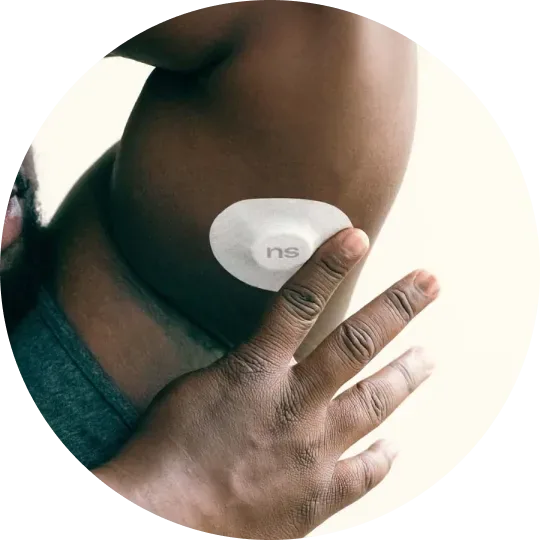
A continuous monitor is a different instrument entirely. It sits on the back of your arm and reads the fluid between your cells every few minutes, for as long as you wear it. You do not get a verdict. You get the line.
Three ways of being measured
Same person, same three months, three very different amounts of information.
That difference is not academic. Every single discovery quoted further up this page lives in the gap between the dots. The pizza and the walk happened inside one afternoon. The coffee happened before breakfast. An average taken over ninety days contains all of them and shows you none of them.
The line is not hard to read once someone shows you the grammar of it. A meal produces a rise, the rise reaches a peak, and then the curve comes back down to where it started. Two things carry most of the meaning: how high it went, and how long it took to come back.
How a single meal shows up on the line
The vocabulary you need before any of your own data means anything.
Once you can see that shape, the experiments run themselves. Eat the thing. Watch the line. Change one variable. Watch it again. Charlotte LaGuardia calls the result bio-individuality, and she is blunt about what the sensor is actually for:
“I think using a CGM provides more than accountability; it's information! These data points and experiments help us learn about our bio-individuality, which helps us make more informed decisions in the future.”
Charlotte LaGuardia, member story published by Nutrisense
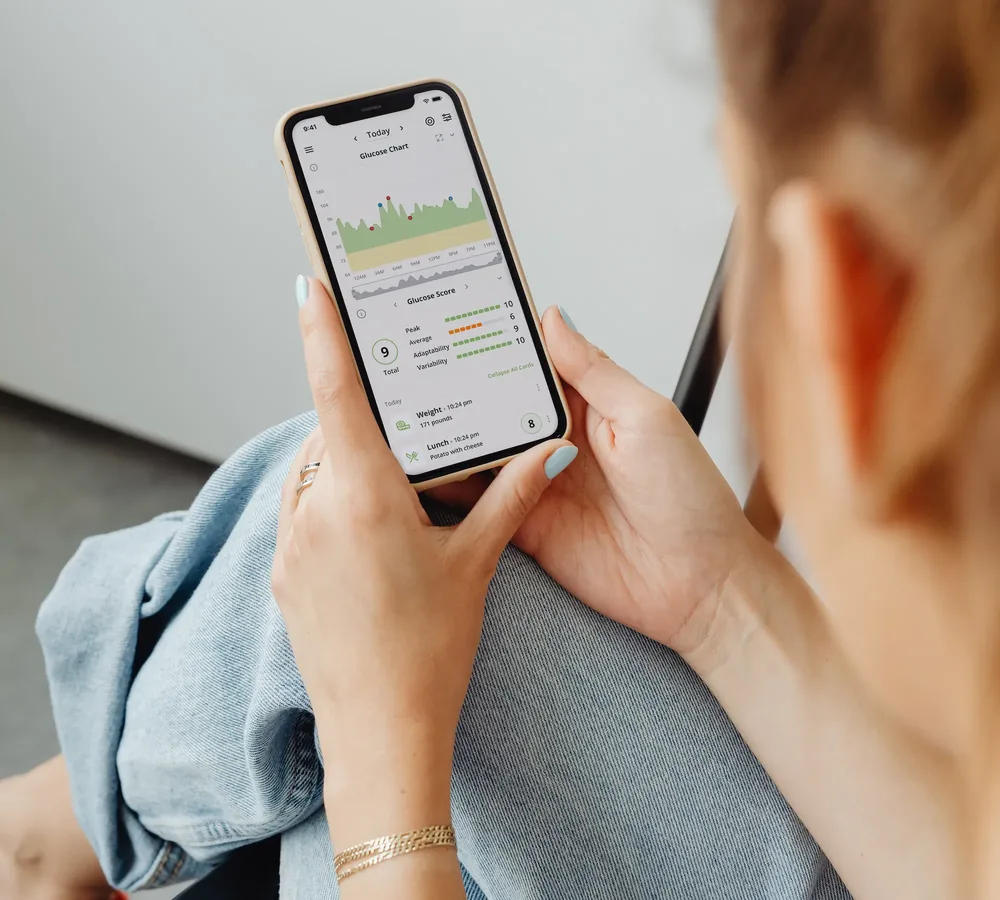
The recurring theme in the published reviews is not weight, at least not first. It is surprise. People discover that something they had never suspected was driving how they felt.
One member went looking for food answers and found a sleep answer instead:
“Biggest surprise for me was how well my glucose correlates with sleep quality. By watching my glucose I noticed that I would wake up in the middle of the night frequently when eating very low carb and sure enough nutrisense showed me that my sleep interruptions often overlapped with times that my blood sugar dipped into a very low range.”
App Store review published by Nutrisense on its reviews page
Note what happened there. He was doing the thing everyone is told to do, cutting carbohydrates, and it was quietly costing him his nights. No food rule was going to catch that. Only his own line did.

Another member had assumed that being active bought him a pass:
“I've been able yo break poor nutrition habits I excused for years because I figured I was healthy & active otherwise & instead came to see how much they affected when adjusted & how having that data motivated those changes!”
App Store review published by Nutrisense on its reviews page, quoted as written
And the plainest version of the whole argument, from a verified Trustpilot review on the same page:
“The CGM program at Nutisense really gave me the opportunity to see how my body was responding to the foods I ate.”
Laure Zayas, verified review published by Nutrisense on its reviews page
“Its really helped me understand how my body reacts to food. I have lost 22 pounds just by making changes to my diet based on feedback from NutriSense.”
Kiran Chitraju, verified review published by Nutrisense on its reviews page
Three parts, and it is worth being precise about each one.
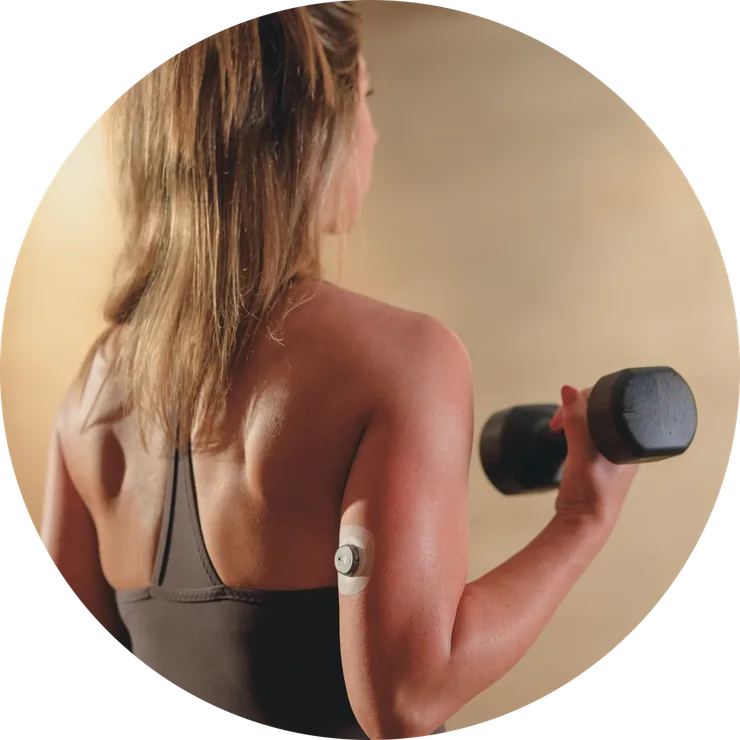
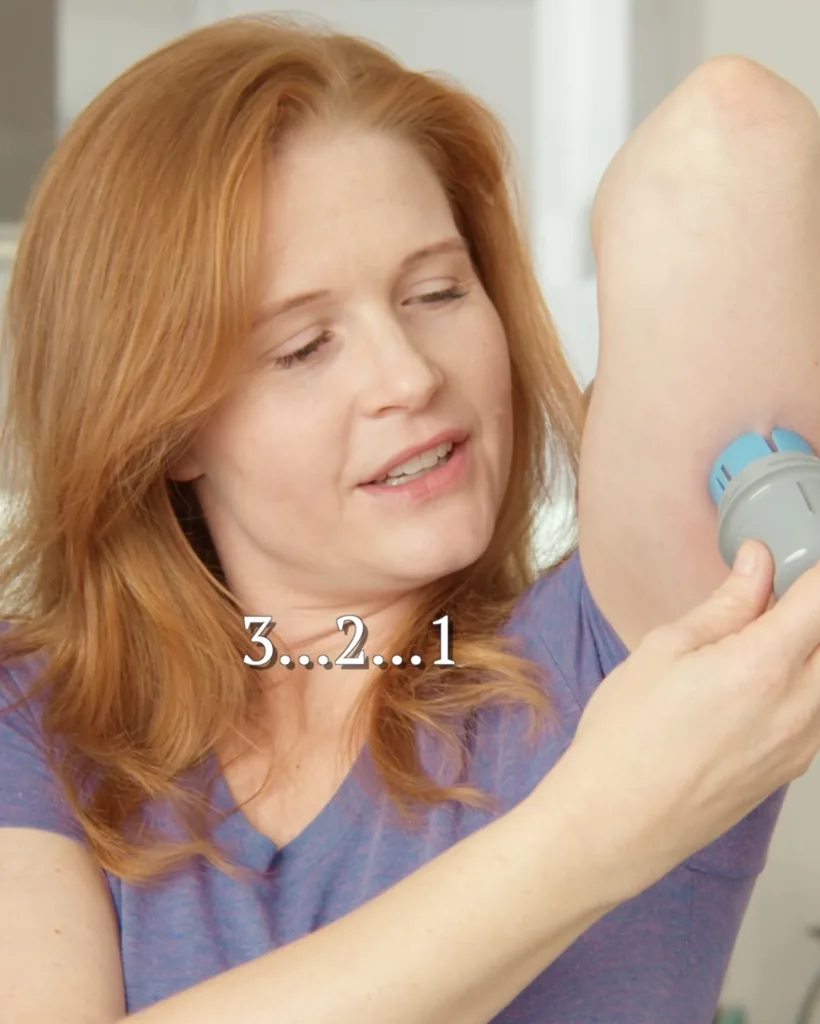
The sensor. A small disc worn on the back of the upper arm, applied with a spring-loaded applicator. Nutrisense describes the insertion as painless and minimally invasive. It measures interstitial glucose, the glucose in the fluid around your cells, every few minutes, and sends it to your phone.
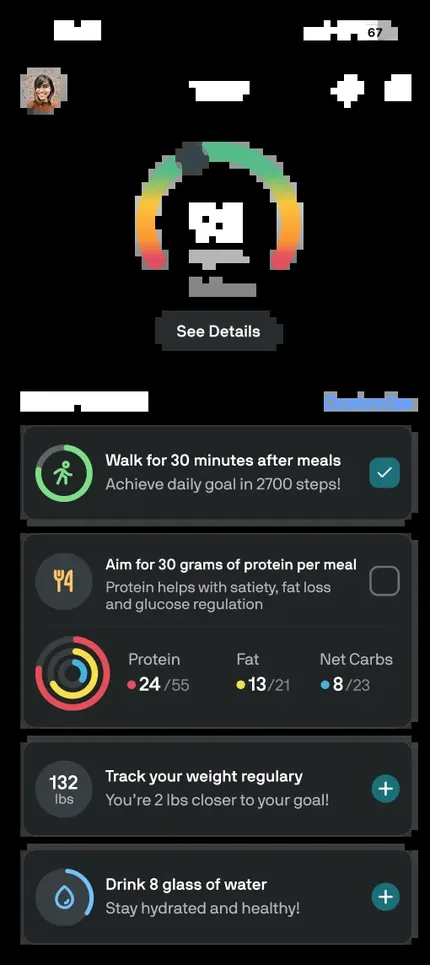
The app. Where the line lives. It turns the raw readings into a daily glucose score built on peak, average, adaptability and variability, and lets you log meals against the curve so that a spike has a cause attached to it rather than being a mystery.
A dietitian, and this is the part most people underestimate. Raw glucose data is genuinely confusing at first, and a number without an interpretation is just anxiety. Nutrisense pairs the sensor with one to one video calls with a registered dietitian or certified nutritionist, and says every one of its dietitians completes an internal Glucose Certification Course developed by its clinical team.
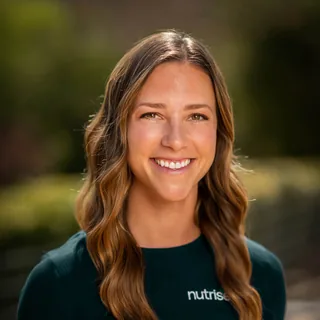 Kara Collier, RDN
Co-founder and VP of Health at Nutrisense, a registered dietitian nutritionist and certified nutrition support clinician, and a Forbes 30 Under 30 honoree. In her founder's note she writes that the company puts “individualized and sustainable lifestyle changes front and center, leaving behind the old-fashioned, one-size-fits-all approaches.”
Source
Kara Collier, RDN
Co-founder and VP of Health at Nutrisense, a registered dietitian nutritionist and certified nutrition support clinician, and a Forbes 30 Under 30 honoree. In her founder's note she writes that the company puts “individualized and sustainable lifestyle changes front and center, leaving behind the old-fashioned, one-size-fits-all approaches.”
Source
Nutrisense, in their own published numbers
Nobody needs another list of good foods. There are thousands of them and they contradict each other, which by itself should tell you something.
What is missing is smaller and much more useful: which of those rules is true for you. Whether your oatmeal behaves. Whether your coffee is helping. Whether a walk after dinner is worth more to you than swapping the dinner. Those are not opinions. They are measurements, and they have been sitting there unread your whole life.
A few weeks of wearing something on your arm is a short experiment against that. At the end of it you are not following a plan written for the average person. You are following the one written by your own body, which is the only one that was ever going to fit.
See the Nutrisense CGM programs, what is included, and what insurance covers.
View the programs Takes you to nutrisense.io. Nothing on this page is medical advice.